Vision and purpose

The What Can They Tell Us? webinar series, hosted by Anna Ferro, highlights innovative approaches to engaging and assessing infants, children, and young people.

Organized by the Child Wellbeing Project at the Centre for Excellence in Child and Family Welfare in partnership with Family Safety Victoria, the series emphasises keeping children and young people central in service provision.

The three webinars explore strategies for maintaining children and young people’s visibility and prioritising their needs in practice by integrating child-centred methods.
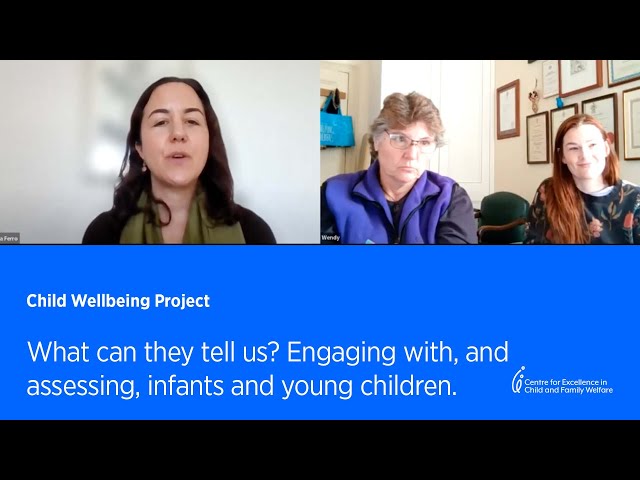
What Can They Tell Us? Part 1- Engaging With, and Assessing, Infants and Young Children
The first webinar in the series features Dr. Wendy Bunston and Gayle Webber, exploring child-cantered practices.
This session set the stage for the three-part series by focusing on effective approaches to engaging and assessing infants, children, and young people. It emphasises the importance of keeping children’s perspectives at the forefront, ensuring their voices are heard, and their needs understood within various support systems.

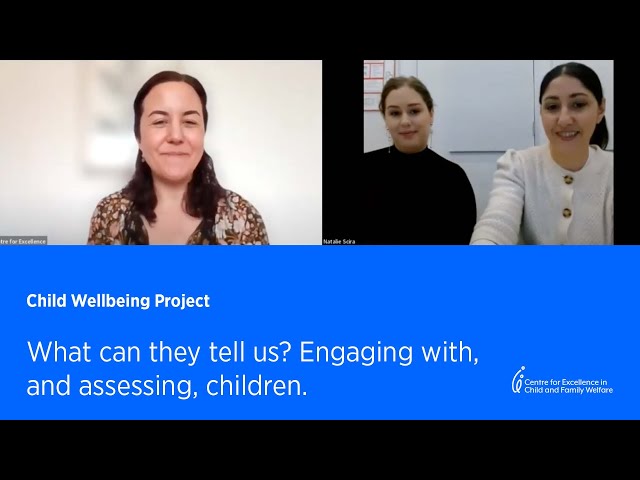
What Can They Tell Us? Part 2- Engaging With, and Assessing, Children

This second webinar in the series features Natalie Scira and Hannah West, offering practical approaches and insights for effectively engaging with and assessing children.

The session highlighted strategies to centre children’s voices, understand their experiences, and navigate the complexities of their needs within family and community contexts; it focuses on building meaningful connections and promoting child-focused assessments in professional practice.
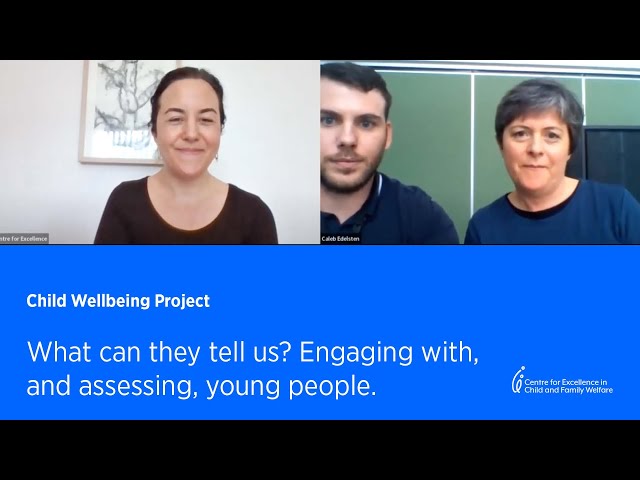
What Can They Tell Us? Part 3- Engaging With, and Assessing, Young People.

The third and final webinar in the series features Lucy Evangelista and Caleb Edelsten.

The session focused on understanding and assessing the unique perspectives and experiences of young people. It explored effective methods for building trust, fostering meaningful communication, and addressing the complex factors influencing their lives.

Emphasising a youth-cantered approach, the webinar provided tools and strategies to ensure young people feel seen, heard, and supported in the assessment and engagement process.

The Child Wellbeing Project resources
View all resources
External Link
Better Practice Guide for Inclusive Engagement The Victorian Government has released the Better Practice Guide for Inclusive Engagement—a practical resource designed to help us create engagement that is accessible, respectful, and truly inclusive. This guide can help you engage with community in a more inclusive way. You can use it before, during and after your engagement.
External Link
Understanding Out-of-home care: A guide for professionals This booklet was developed by the Children in Care Collective, explaining the key elements of the different OOHC systems across Australia for healthcare providers.
External Link
Footprints in time: Longitudinal study of Indigenous children (LSIC) early childhood report This study from Queensland University of Technology explores how early childhood experiences shape wellbeing for Aboriginal and Torres Strait Islander children. Drawing on 14 years of data from over 1,700 children and their families, the report finds that early connections to culture, Country, language and identity, as well as strong family support and early learning, are linked to better social and emotional wellbeing into adolescence. The study highlights the importance of culturally grounded, place-based supports and equitable access to early learning, technology and culturally safe services across urban and remote communities.
File
Practice Guide: Getting the most out of Student Support Group Meetings (SSGs) This Practice Guide is intended to support professionals working with children and young people in Out-of-Home Care (OoHC) to better engage in Student Support Group (SSG) meetings consistent with the best interests of the child and young person involved.
3
Webinars produced
1,000+
Webinar views
Become a member
The Centre’s membership benefits build collaboration, advocacy, and capacity within the child and family services sector, ensuring a more resilient and supportive environment that provides better outcomes for children and families.
Find out more